
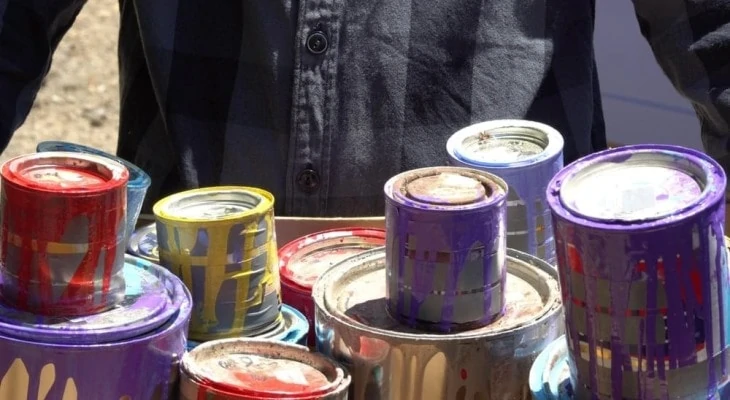
It is challenging to decide what solvent to use to thin your oil-based paint, as they are all so similar.
Are there any differences between paint thinner and turpentine? The short answer is yes, but for a more detailed explanation, keep reading.
Paint Thinner

Paint thinner (such as this) is a substance that thins your paint reducing its viscosity, and is also used as a cleaning solution. General uses for paint thinner include:
- It makes the paint easier to apply
- Extends the life of the paint
- Enhances spray applications
- Cleans paint brushes and rollers
- Removes spills, stains, and overspray’s
- Can degrease surfaces
The majority of all types of thinners are made from petroleum, such as paint thinner. There are other solvents made from an alcohol-base which can also be used to thin paint and clean tools like:
Although very effective, paint thinner can be harmful. It is highly flammable and poisonous. It can be ruthless on the skin and can cause severe damage to your eyes.
To ensure you have all the facts before deciding what solvent to use, learn about the advantages and disadvantages of paint thinners.
Advantages of Paint Thinner
- It is more potent than mineral spirits.
- It has a reasonable evaporation rate.
- It is milder than lacquer thinners.
- You can use it safely on wood, metal, and concrete.
- It can be used as a cleaning agent for your painting tools.
- It is readily available.
Disadvantages of Paint Thinner
- It does not work on rubber or plastic.
- It is more expensive compared to other solvents such as mineral spirits.
Turpentine

Turpentine is made from a resin taken from pine trees. It can also be referred to as turpentine oil or turps. It is made up of oil and a resin known as rosin. The rosin is distilled with steam, turning it into turpentine.
Turpentine is a commonly used as a solvent in paint thinner and varnishes. It also has medicinal purposes and is used in cosmetology.
Advantages of Turpentine
Turpentine has many significant advantages and is not just used as a paint thinner. Turpentine oil is used in certain chest rubs like Vicks VapoRub. It is distilled for use in foods and drinks for flavor, and it’s an ingredient in soap and cosmetics.
Makes Oil-Based Paint More Efficient
Oil-based paint usually is very thick and cannot be used in that consistency. Turpentine is added to thin the paint before being applied. It has a high evaporation rate, making it the most effective substance to use in oil-based paint. Turpentine also makes the paint easier to apply.
Excellent Cleaning Agent
Turpentine is used to clean paint off most surfaces. What’s excellent about turpentine is that it not only cleans fresh paint but can remove slightly hardened paint with ease.
Before using turpentine to clean your paintbrushes, you will need to wipe them down with rags or paper towels.
Emerge the brushes in the turpentine and swish them around several times for a good clean. Rinse the brushes thoroughly with soap and water and allow them to dry.
When mixed with alcohol, it is used for cleaning and restoring antique paintings.
It Can Be Used as a Stain Remover
Not only is turpentine an effective solvent in paint thinning, but it can also be used around the house in problem areas to remove stains.
Fixtures that stain with use, such as toilets, sinks, and ceramic bathtubs, can all be cleaned with turpentine. To remove stubborn stains, mix turpentine and table salt in an equal ratio and apply to the stained area.
Let the solution sit for 20 minutes, and then scrub. Rinse the area with water and re-apply if necessary.
It’s Better for You!
Compared to petroleum-based solvents, it is less toxic and safer to use. If you are frequently exposed to painting work, this is an essential factor to consider.
It Can Be Used as Furniture Polish
When combined with beeswax, lavender, and soap flakes, you can make superior furniture polish. Not only does it clean the furniture, but it also keeps them in excellent condition, extending their usage.
The Natural Solution
Turpentine is free of any petroleum distillates making it more eco-friendly. Petroleum distillates release compounds that cause pollution and degradation.
Disadvantages of Turpentine
Turpentine can also be harmful to your health if you have been exposed to it regularly and for long periods. It can cause:
- Headaches
- Dizziness
- Vomiting
- If exposed to the eye, turpentine can cause irritation
- If it has been inhaled or swallowed, it can cause kidney and bladder irritation
- It is poisonous and, if consumed, could lead to death.
Turpentine and paint thinner have a lot in common, but they also have key differences that everyone should know about:
What Are the Differences between Paint Thinner and Turpentine?
- Paint thinner is a liquid used for thinning the consistency of another liquid.
- Turpentine is a volatile oil primarily used as a solvent in paint.
- Paint thinner is made from petroleum, and turpentine is made from the sap of pine trees.
- Turpentine is a more “natural” product, and although it does go through some synthetic processes, the core ingredient and some of the additives, like beeswax, are more eco-friendly.
- Turpentine is more expensive compared to paint thinner.
- Turpentine has a more potent smell.
- Turpentine helps the paint to dry quicker.
What is a Less Toxic Alternative to Paint Thinner and Turpentine?

There are more natural and less toxic products like the Real Milk Paint Citrus Solvent, a safer alternative to turpentine and its hazardous fumes. It is made from 98% citrus oil and 2% water, and it can be used as a degreaser, paint thinner, and a substitute for mineral spirit solutions.
Can I Use Paint Thinner or Turpentine to Thin Latex Paint?
Latex paint shouldn’t need to be thinned out. It is manufactured to be the correct viscosity for most paint rollers and brush applications.
However, if you are using a paint sprayer, you might have to thin out your latex paint for the smoothest application.
Latex paint is water-based and should only be cleaned up or thinned with water.
Precautions
Both paint thinner and turpentine have harmful side effects, and you need to take the proper precautions when handling them. Gloves, protective eyewear, and masks need to be worn at all times when you come into contact with these substances. When using either of them, always be in well-ventilated areas.
Paint thinner is highly flammable, and it is advised that you keep a fire extinguisher close by in case of any emergencies.
Never pour paint thinner down the drain or into the ground as it will contaminate it. When filling a container with paint thinner, never fill it up to the brim. The vapors released need space to expand within the container.
Final Thoughts
Paint thinner and turpentine are the most effective solvents used for thinning oil-based paint. If you’re using both, they should always be used in a ratio of 3:1.
You should never use them to thin latex paint, shellac, or lacquers.
If you can afford turpentine and don’t mind the smell, it is your most effective cleaning solution, is more natural, and helps the paint dry quicker.
If you’re just looking for the least toxic way to thin oil-based paints, this may be your best bet.

Very helpful!
Thanks, Pat.
Appreciate the thorough explanation.